
Member of the Month
Rolph Davis
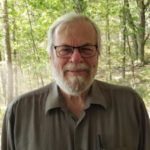
Rolph Davis has built a career around his passion for birds, but it is Thoroughbred racing that has given him and his wife Joan decades of thrills.
Now, some 30 years after he first became involved in racehorse ownership with friends in the Very Dry Stable, Davis is eagerly awaiting the Woodbine debut of his newest 2-year-old, homebred Townline Bertie. Over those years, horses he has bought or bred have won more than 107 races and a dozen stakes, not including those he has raced in partnership.
“I just love the game,” said Davis.
His enthusiasm for racing started long before he became an owner.
“I was at Woodbine when it opened but my brother and I were too young to be allowed in. So we stood outside the fence, where the hotel is now, and my older brother would come over and take our $2 bets.”
His professional life took him in another direction.
Davis studied Avian Ecology at the University of Western Ontario, where he earned his doctorate, and went on to become President, CEO and Chairman of the Board of LGL Limited, one of Canada’s largest employee-owned environmental research and consulting firms.
At LGL, Davis worked on major projects involving Arctic birds and marine mammals, with bird hazards to aircraft becoming one of his special areas of expertise. In 2019, he received the Bird Strike Association of Canada’s Bruce Mackinnon Memorial Award for lifetime achievement.
Racing, though, remained an important part of his life.
In 1994, Davis joined Very Dry Stable, whose partners included Woodbine executives Jack Kenney and Greg Thompson, with Robert Tiller as trainer.
“The initial output was $8,000,” said Davis. “We never had to put any more money in and we won 116 races and $4.8 million in purses. It was a bit easier to claim horses back then.”
By the turn of the century, Davis had begun buying yearlings at the CTHS Ontario sale on his own account.
One of the best came in 2002, when he paid $50,000 for the only yearling offered that year by breeder Ron Clarkson, a Distorted Humor colt he would later name Twisted Wit.
Twisted Wit was quick. He won two stakes races as a juvenile and three more over the next few years, earning nearly $800,000 for Davis.
Other successful yearling purchases included multiple stakes winner Spadina Road, his stakes-placed half-sister Casa Loma, Langstaff and Just Humor Me.
Just Humor Me later joined Davis’s broodmare band and produced stakes winners Songs and Laughter and Laughing Falcon. Other homebred stakes winners included Forester’s Turn, out of Davis’s mare Eff Bee Eye, named for Tiller’s late wife Gail.
His involvement in racing has extended beyond his own horses. Davis has served on the CTHS Board of Directors and is a member of the Jockey Club of Canada. He was also a shareholder in leading sire Souper Speedy, who passed away last year.
Today, Davis remains a strong advocate for smaller breeders and believes more needs to be done to help them make breeding financially sustainable.
“The breeders’ awards and HBPA owner’s awards are very helpful,” said Davis. “And the sale this year was great. But still, the median was $17,000 so half the breeders are selling at a loss. Without the little guy, who is going to fill the races? I think the breeders’ awards should be available for the less expensive runners.”
Davis is the breeder of Veery, one of Woodbine’s top high-level claimers, by Giant Gizmo out of his mare Roust’em Bertie. Veery has won more than $100,000 this year, but because she is now eight years old, Davis no longer receives breeders’ awards from her success.
He is also outspoken on horse racing needing to be treated like a business and asks the federal government to adjust tax laws. Income and loss deductions are governed by Section 31 of the Income Tax Act, which restricts loss write-offs for sideline or hobby farming operations.
Davis plans to continue breeding and racing, although now on a smaller scale. He has four mares at John Carey’s T.C. Westmeath Stud, along with yearlings and foals, and Carey recently bought into the mares.
Davis remains closely involved in every breeding decision.
“I plan all the matings,” said Davis. “I enjoy it, it’s challenge to figure out who to breed a mare to, try to breed a good horse.”
That challenge remains one of the things that keeps him engaged after more than three decades in the sport.
And, as Davis puts it simply:
“I just love the game.